
What Do Bed Bugs Look Like? Eggs, Nymphs, Bites and How to Confirm an Infestation
What adult bed bugs, nymphs and eggs look like, how the bites differ from mosquito and flea bites, 7 signs that confirm them, and a 10-minute flashlight check.
- Formax technical team
- 19 min read
In this article
- What do bed bugs look like? The adult bug
- What baby bed bugs look like, and how they grow
- Bed bug eggs: what they look like, where they are, and why ordinary sprays don’t kill them
- What bed bug bites look like, and how to tell them from mosquito and flea bites
- 7 signs that confirm bed bugs in your home
- Bugs that look like bed bugs but aren’t
- Where bed bugs hide in an Egyptian home
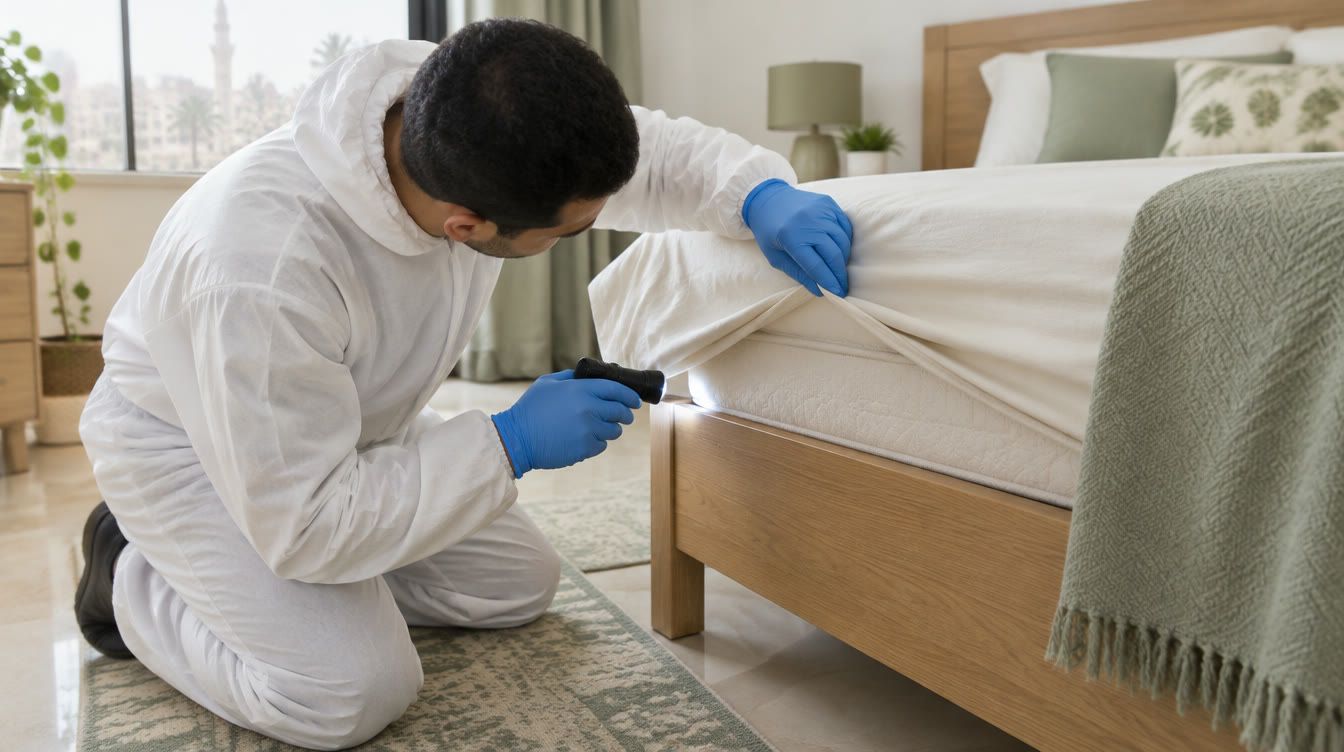
- How to check yourself: a 10-minute flashlight inspection
- When can you handle it yourself, and when do you need a company?
- The bottom line
You woke up with bites on your arm and no idea where they came from. Or you spotted a small brown insect crawling across the sheet and your stomach dropped. We’ll show you what bed bugs look like at every stage: the adult bug, the young ones that are almost see-through, and eggs about the size of a pinhead. We’ll also explain how their bites differ from mosquito and flea bites, and go through the insects people often mistake for bed bugs.
By the end you’ll be able to check your own home in ten minutes with your phone’s flashlight, and decide whether this is something you can handle yourself or a job for professional bed bug control.
What do bed bugs look like? The adult bug
An adult bed bug is close to the size of an apple seed, or a lentil if you’d rather compare it to something in the kitchen. Most are 5 to 7 mm long, so you can see one with the naked eye, but you have to look carefully.
When it’s hungry, its body is oval and flat, almost as thin as a sheet of paper. That flatness is how it hides so well: any crack you can slide a plastic card into is a crack a bed bug can squeeze into. It’s brown, turning more reddish after a meal. It has six legs and two short antennae, and no wings at all.
Two things set it apart from many household insects:
- It doesn’t fly. If the insect you saw flew away, it wasn’t a bed bug.
- It doesn’t jump. If it hopped like a flea, that’s not a bed bug either. Bed bugs walk, and they can run fairly fast when you uncover their hiding place.
It bites, then goes back into hiding
Bed bugs don’t live on your body the way lice do, and they don’t stay attached to the skin the way ticks do. A bed bug comes out of its hiding place when it senses your body heat and breath while you sleep. It bites, feeds, and then crawls back into a crack. That’s why you rarely see one by day.
Before and after feeding
Bed bugs feed on human blood, usually at night while you’re asleep. A meal takes roughly 3 to 10 minutes, and you don’t feel it, because their saliva contains a substance that numbs the skin.
Before feeding, the bug is flat and light or dark brown. After feeding it looks so different you might think it’s another insect. The body swells up like a small balloon, gets longer, and turns dark red. Crush one at this stage and it leaves a smear of blood.
What are they called in Egypt?
Many people in Egypt say “baq el-khashab” (wood bugs) or “baq el-sarayer” (bugs of the beds). Both names refer to the same insect, whose scientific name is Cimex lectularius. The “wood bug” name stuck because it loves the cracks in wooden beds and wardrobes, but it doesn’t eat wood. For a bed bug, wood is just a hiding place close to where you sleep.
If you have a magnifying glass, you’ll notice fine, short hairs on its body and a belly divided into clear bands. You don’t need this to identify one, but it helps when you’re unsure.
What baby bed bugs look like, and how they grow
When an egg hatches, out comes a tiny bed bug about the size of a pinhead, pale in color, somewhere between white and faded yellow. Before its first meal it can be so close to transparent that you won’t see it at all on a light mattress. That’s why so many people say “I can’t see anything” when they do have an infestation.
A baby bed bug (entomologists call it a nymph) is a smaller, paler copy of the adult. It isn’t a different species. After it feeds, a clear red dot shows up inside its see-through body, and sometimes the whole body looks red. Young bugs are much easier to spot in that state.
Finding young bed bugs usually means you have more than one stray bug that rode in on a bag. A female is laying eggs somewhere in the home, and the cycle is already running.
Five stages before adulthood
A young bed bug goes through five growth stages. At the end of each one it sheds its old skin and comes out in a bigger one, and it has to take at least one blood meal to move from one stage to the next. So every young bed bug in your home bites at least five times before it becomes an adult.
The shed skins don’t disappear. They stay right where the bugs are hiding. They look exactly like a bed bug, only empty, light and pale yellow. If you find something like that in a mattress seam, it’s strong evidence.
How long from egg to adult
It depends on temperature and how easy it is to find a meal. In warm conditions with regular feeding, a bed bug can reach adulthood in about 5 weeks. In cold weather, or when food is scarce, it can take months. An Egyptian summer suits bed bugs very well, so a small infestation can grow quickly.
Here’s a fact people don’t like hearing: both young and adult bed bugs can survive without feeding for months. Closing a room and leaving it empty for a while will not kill the bugs inside it.
Bed bug eggs: what they look like, where they are, and why ordinary sprays don’t kill them
A bed bug egg is about 1 mm long, the size of a pinhead or a bit smaller. It’s pearly white and shaped like a tiny barrel or a short grain of rice, with a small cap at one end that the young bug pushes open when it hatches. After about 5 days a dark spot, the eye of the developing bug, shows inside.
The eggs come out sticky, so they glue themselves to wood or fabric and stay put even if you shake out the mattress or move the bed. On light fabric it’s very hard to see without a flashlight and a magnifier.
Where are the eggs?
Females pick dark, sheltered spots close to where they feed:
- Inside mattress seams and along the edges.
- In the joints of a wooden bed frame and around the screws.
- In cracks in bedside tables and drawers.
- Behind picture frames and the headboard behind your head.
Eggs usually sit in small groups near black droppings and empty skins, and hatched ones leave clear shells open at the top.
A single female can lay hundreds of eggs over her life, one, two or more a day. At normal indoor temperatures the eggs hatch in about a week, and they can take longer when it’s cold.
Why ordinary spraying doesn’t reach them
There are 3 reasons the eggs are the hardest part of any treatment.
First, the eggs are hidden at the deepest point of the crack. Spray that lands on the mattress surface or the floor doesn’t get inside a closed seam or a wooden joint.
Second, many insecticides sold for home use hit hard on any insect they touch and do little to eggs. The adult bug dies, and the eggs next to it hatch a few days later as if nothing happened.
Third, spraying without a plan drives the adults to new spots where they lay more eggs, so one hiding place becomes several.
That’s why our bed bug treatment is done over two visits about two weeks apart. The second visit catches the young bugs that have hatched since, before they grow up and start laying eggs themselves.
What bed bug bites look like, and how to tell them from mosquito and flea bites
A bed bug bite is a small, red, itchy bump, so similar to a mosquito bite that plenty of people mix them up. On light skin the bites look red or pink. On darker skin they can look brownish or purplish and are harder to notice.
The pattern gives them away more than any single bite does. Bed bugs tend to bite several times close together, so you’ll find 3 or 4 bites in a straight line or bunched in one area. They go for whatever skin is uncovered while you sleep: the neck, face, arms and shoulders, and the legs if they aren’t under the blanket.
Timing matters too. You don’t feel the bite, and the mark can take a day or more to appear. Some people never react at all, even when they’re being bitten every night. So two people can share a bed, one covered in bites and the other with nothing, and the bugs are feeding on both of them.
| Bite | Bed bugs | Mosquitoes | Fleas |
|---|---|---|---|
| Where on the body | Skin exposed during sleep: neck, face, arms, shoulders | Any uncovered skin, often hands, legs and face | Low down, around the ankles, heels and calves |
| What they look like | Red itchy bumps in a line or a cluster | Single raised bites, each in a different place | Small red dots that itch a lot, often many close together |
| When you notice them | In the morning, sometimes a day or more later | Right away, often with the buzzing at night | Any time, and more often if there’s a cat or dog at home |
The table helps you guess, but bites alone aren’t proof. Even the CDC says bed bug bites look a lot like mosquito and flea bites. The real proof is finding the bugs themselves or the traces they leave, which is what the next sections cover.
In children and adults
Bites on a child look about the same as on an adult. Reactions differ far more from person to person than by age: for some people a bite is a small dot that fades, for others it swells and itches for days. The trouble with children is that they can’t stop scratching, so the skin breaks and gets infected more easily. Keep the child’s nails short, wash the bites with soap and water, and use a cold compress if they’re itchy.
When to see a doctor
Bed bugs are not known to spread disease to people, and most bites clear up on their own within about a week. Still, take yourself or your child to a doctor if:
- The swelling or redness keeps getting bigger and spreads around the bite.
- Pus appears, or the area feels hot and hurts more over time.
- There’s a fever, or the rash has spread across the whole body.
Swelling of the face or lips, or any difficulty breathing, means a severe allergic reaction. It’s rare, but go to the emergency department right away. And don’t put any cream or medicine on the bites without asking a doctor or pharmacist first, especially for children and pregnant women.
7 signs that confirm bed bugs in your home
Bites make you suspicious. These signs confirm it. The more you find, the more likely it is, and signs 1 to 5 carry the most weight because they come from the bugs themselves.
-
Black dots on mattress seams or the bed frame. These are bed bug droppings, which are digested blood. They look like felt-tip marker dots, often grouped together. Wipe one with a damp tissue and it smears into a reddish-brown streak, like rust. Ordinary dirt doesn’t do that.
-
Small blood spots or rust-colored stains on sheets and pillowcases. They come from a fed bug getting crushed under you as you turn over, or from a drop of blood leaking from a bite. One stain could be anything; stains that keep appearing are worth checking.
-
Empty, pale yellow skins. These are the skins young bed bugs shed as they grow. They look exactly like a bed bug but are light and hollow, and you’ll find them in seams, cracks and bed joints.
-
Eggs or egg shells. Pearly white specks the size of a pinhead, glued to wood or fabric. You’ll need a strong flashlight, and a magnifier if you have one.
-
Seeing a live bed bug. A flat brown insect, or a small pale one with a red dot inside. The easiest time to catch one is at night or early in the morning, when you pull back the sheet or lift the mattress suddenly.
-
Bites that keep coming in the same pattern. Bites in a line or a cluster, there when you wake up, mostly on skin left uncovered while you sleep. On its own it isn’t enough, but with any sign above it completes the picture.
-
An odd smell in the bedroom. In heavy infestations you may notice a musty, slightly sour smell. Don’t rely on it. It doesn’t show up in small or medium infestations, and it’s the last sign to appear.
Bed bug droppings or cockroach droppings?
Cockroach droppings are small dry specks, like ground black pepper or dark sawdust, and you find them in the kitchen, in cupboards and behind appliances. Bed bug droppings are flat stains that soak into fabric or wood, as if someone had dabbed ink there, and you find them on beds and sofas. Wipe cockroach droppings with a damp tissue and the specks just move around. Bed bug droppings smear and leave a rust-colored mark.
If you find one or two of the first five signs, take a close-up photo of what you found and send it to us on WhatsApp. We identify the insect from your photo for free, and a technician will tell you whether it’s a bed bug or something else. Our team answers in Arabic and English. If it does turn out to be bed bugs, bed bug control is far easier and quicker at the start than after the bugs have spread through the home.
Bugs that look like bed bugs but aren’t
Not every small brown insect in your bed is a bed bug, and the lookalikes need completely different treatment. The most common ones:
| Insect | What it looks like | How it differs from a bed bug | Where you’ll find it |
|---|---|---|---|
| Carpet beetle larva | A small, slightly long grub covered in hairs, with brown and light stripes | Hairy and not flat, and it doesn’t feed on blood. Its hairs can make sensitive skin itch | Carpets and rugs, wardrobes with wool clothes, under sofas |
| Adult carpet beetle | A small round beetle with a spotted, patterned back | Round rather than flat, and it has wings and flies | Near windows and balconies |
| Booklice | A pale, soft insect, smaller than a young bed bug | Doesn’t bite, and lives on light mold | Books and old paper, damp spots, kitchen cupboards |
| Young cockroaches | A long brown or black insect with long antennae | Longer body, runs very fast, and doesn’t bite you while you sleep | Kitchens and bathrooms, behind the fridge and the cooker |
| Fleas | A very small dark insect, its body flattened from side to side | Jumps a long way, and bed bugs never jump | On cats and dogs, in carpets and where the pet sleeps |
| Ticks | A round body like a small bead, and adults have 8 legs | Latches onto the skin and stays there, while a bed bug bites and leaves | On pets and in gardens |
| Bird bugs and bat bugs | Can’t be told apart from bed bugs with the naked eye | Telling them apart takes a magnifier and experience. They bite people once a nest is removed or abandoned | Near pigeon or bat nests on rooftops or behind the AC unit |
Young cockroaches are the most common mix-up, since both are brown and hide in cracks. A young cockroach, though, has a long body and very long antennae for its size, and it lives in the kitchen and bathroom, not in the bed. A bed bug is a wide oval with short antennae.
If you find something that looks like a bed bug and there are pigeon nests near the home, or bats roosting on the roof, it could be a bird bug or a bat bug. Treating those starts with removing the nest the right way. Spraying the bed alone won’t solve it.
Where bed bugs hide in an Egyptian home
Bed bugs stay close to where people sleep or sit for long stretches. In Egyptian homes, look at:
- Wooden beds, especially older ones with joints, screws and carved details. Every joint and every screw hole makes a good hiding place.
- Mattress seams and edges. This is the number one spot in most infestations, because it’s right next to their food.
- Sofas and living room sets. If someone sleeps on the sofa or sits there for hours in front of the TV, the bugs find their way into the cushion seams and under the upholstery.
- Curtains. The folds at the top, near the rings, are quiet and dark.
- Sockets and light switches next to the bed. Bed bugs get in through the gaps. Never take a socket apart yourself while the power is on.
- Picture frames and wall hangings, especially ones hung above the head of the bed.
- Bags and boxes under the bed. They make an ideal hideout that nobody opens except once in a long while.
- Skirting boards and cracks in parquet floors and walls. In bigger infestations, the bugs reach these cracks too.
Bed bugs can move between flats that share walls through cracks, plumbing pipes and electrical openings. So if your neighbor has bed bugs and treats them, they can move over to you, and the other way around. If you hear that a neighbor has bed bugs, talking to them early saves both of you a lot of trouble.
Especially after travel
Most infestations that start in a clean home arrive in a suitcase. If you’re back from a hotel, student housing or a home that has bed bugs, don’t put your bag on the bed or the sofa. Leave it on a tiled floor or in the bathroom, check its seams and pockets with a flashlight, and wash the clothes in hot water right away before they go back in the wardrobe. The same goes for any used sofa, mattress or bed: inspect it before it comes into the flat, not after.
How to check yourself: a 10-minute flashlight inspection
You need your phone’s flashlight, an old plastic card (a phone top-up card or a store card), a damp tissue and some clear sticky tape. The best time is at night before bed or early in the morning.
-
Remove the sheet and pillowcase slowly (2 minutes). Look at the fabric under the light. Are there black dots or small red spots? Pay attention to the side against the wall.
-
Check the mattress seams (3 minutes). Shine the flashlight at an angle along the seams, the edges and the label. Run the edge of the card gently along the seam. It will push out any bug, egg or skin hiding inside.
-
Lift the mattress and check the bed frame (2 minutes). Look at the joints, screws and corners, and the back of the headboard. Use the card in the cracks.
-
Bedside tables and picture frames (1 minute). Open the drawers and look at the inside joints. Take down the frame above the bed and check the back.
-
The sofa, if someone sits on it a lot (1 minute). Check the seams and under the cushions.
-
The damp tissue test. If you find a black dot and you’re not sure what it is, wipe it with the tissue. If it smears reddish-brown, it’s most likely bed bug droppings.
-
Collect a sample and photograph it. If you find an insect, pick it up with the sticky tape and take a close-up photo with a coin next to it so the size is clear. Then send the photo to a technician to identify.
Found nothing? That doesn’t prove your home is clear. A new infestation can be just a few bugs hiding in a single joint. Check again in a few days, and watch whether the bites keep appearing in the same places. If the bites continue and you can’t find any trace, send a photo of the bites with a description of the room, and the technician will tell you where else to look.
One important point: don’t spray anything before you inspect or take photos. Spraying pushes bed bugs deeper into hiding, and then your inspection will give you the wrong answer.
When can you handle it yourself, and when do you need a company?
To be fair, some things you do yourself make a real difference. They cut the number of bugs and make any later treatment easier.
- Wash sheets, pillowcases and clothes kept near the bed in hot water, 60°C if your machine allows it. If you have a dryer, run it on the highest heat for at least half an hour.
- Vacuum the mattress seams, the sofa and the carpets. Then seal the vacuum bag, or empty the canister into a tightly closed bag, and take it out of the flat immediately.
- Put the mattress in a zippered cover made for bed bugs. Any bugs inside won’t be able to get out and bite you.
- Clear the clutter around and under the bed. Every extra box and storage pile is a new hiding place.
- Don’t move furniture or clothes from the affected room to another room until they’ve been washed or checked.
These steps may be enough if the infestation is in its early days and limited to one bed. Supermarket insecticides are what usually make things worse. They kill the bugs the spray touches, they don’t reach inside cracks, and they don’t affect the eggs. Worse, random spraying sends the bugs running into the living room and the kids’ room. Bug bombs (foggers) have the same problem: the mist settles on surfaces and never gets into the cracks.
When should you call a company? If you’ve found bed bugs in more than one room, or in the bed and the sofa at the same time, or if you sprayed before and they came back two weeks later. The same applies if you live in a building and you know the neighbors have bed bugs.
With our bed bug control, we start with an inspection, then do targeted treatment of the cracks using materials registered for home use, and come back for a second visit about two weeks later for any bugs that hatched in between. You get a written 5-year guarantee, with a follow-up every 3 months, in every governorate in Egypt. Questions first? All our contact options are on the contact page.
The bottom line
Bed bugs are small, but you can spot them once you know what you’re looking for: a flat brown bug the size of an apple seed, pale young bugs, pinhead-sized white eggs, and black dots along the mattress seams. Bites alone should make you suspicious. The traces are what prove it.
If you find signs, don’t rush to spray. Take photos, note where you found them, and wash the bedding in hot water. Then decide calmly whether to handle it yourself or call a technician. The earlier you catch bed bugs, the easier they are to treat.
Frequently asked questions
Are bed bug bites dangerous?
Usually not. Bed bugs aren't known to spread disease to people, and the itching and swelling normally clear up within about a week. The real risk is hard scratching, which breaks the skin and can get infected. Severe allergic reactions are very rare. If the swelling keeps growing, you see pus, or you struggle to breathe, see a doctor straight away.
How do I deal with a skin reaction to bed bug bites?
Wash the bites with soap and water, apply a clean cold compress for the itching and swelling, and try not to scratch. If the itch won't settle, ask a pharmacist or doctor, and don't use any cream without advice, especially for children and pregnant women. Treating the skin won't end it, though. The bites continue while the bugs are still there.
Do bed bug bites look different on children?
They look about the same: red, itchy bumps, often in a line or cluster on the neck, face or arms. Children just can't stop scratching, so bites break open and get infected faster. Keep nails short and wash the bites with soap and water. If the child has a fever or the rash covers the whole body, see a doctor, because that isn't typical of bed bugs.
What causes bed bugs to show up in a home?
Bed bugs have nothing to do with how clean your home is. They travel with people and their things. The usual routes are luggage after a trip or a hotel stay, used mattresses and sofas, and cracks and pipes shared between flats in the same building. An overnight guest can bring them too, so check anything second-hand before it comes inside.
What are wood bugs, and what do they look like?
Wood bug (baq el-khashab) is a common Egyptian name for the ordinary bed bug, because it hides in cracks in wooden beds and wardrobes. It looks the same: flat, oval, reddish-brown, about the size of an apple seed. It doesn't eat wood. It feeds only on human blood, so treatment targets cracks and joints, and you don't need to replace the furniture.
What is the best way to get rid of bed bugs for good?
Find exactly where the bugs are, treat those spots with a suitable product, and repeat the treatment once the eggs hatch. Hot washing, vacuuming and sealed mattress covers help a lot, but they rarely solve a spread-out infestation on their own. Random spraying with supermarket insecticides usually scatters bed bugs around the home instead of killing them.
Sources
The scientific information in this article was checked against these sources:
- About Bed Bugs · CDC (Centers for Disease Control and Prevention)
- Bed Bugs Appearance and Life Cycle · US EPA (Environmental Protection Agency)
- How to Find Bed Bugs · US EPA (Environmental Protection Agency)
- Do-it-yourself Bed Bug Control · US EPA (Environmental Protection Agency)
- Bed Bugs (ENTFACT-636) · University of Kentucky Entomology
- Bedbugs · NHS (UK National Health Service)
Formax technical team
This article was written and reviewed by the technical team at Formax German Pest Control: the technicians who inspect and treat homes and businesses in every governorate in Egypt. The scientific information was checked against the sources listed above.
More about FormaxRead next
-
Bed bug treatment with Formax
How we treat it, number of visits, the guarantee and the price.
- Article
How to Get Rid of Cockroaches for Good: Gel or Spray? A Kitchen and Bathroom Guide
How to get rid of small cockroaches in the kitchen and drain cockroaches in the bathroom: identify the type, use gel properly and spot which home remedies are myths.
- Article
Termites vs Wood Borers: How to Tell Them Apart and Save Your Furniture
How to tell wood borers (woodworm) from termites by the marks each one leaves, which home remedies do harm, and when your furniture needs professional treatment.